

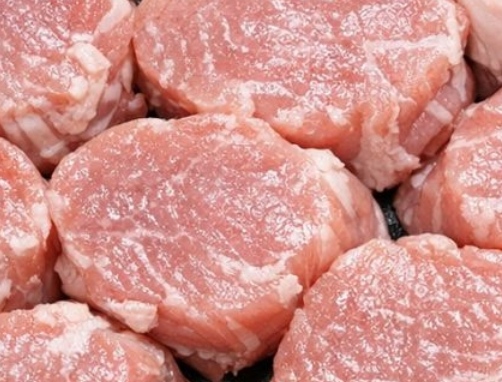
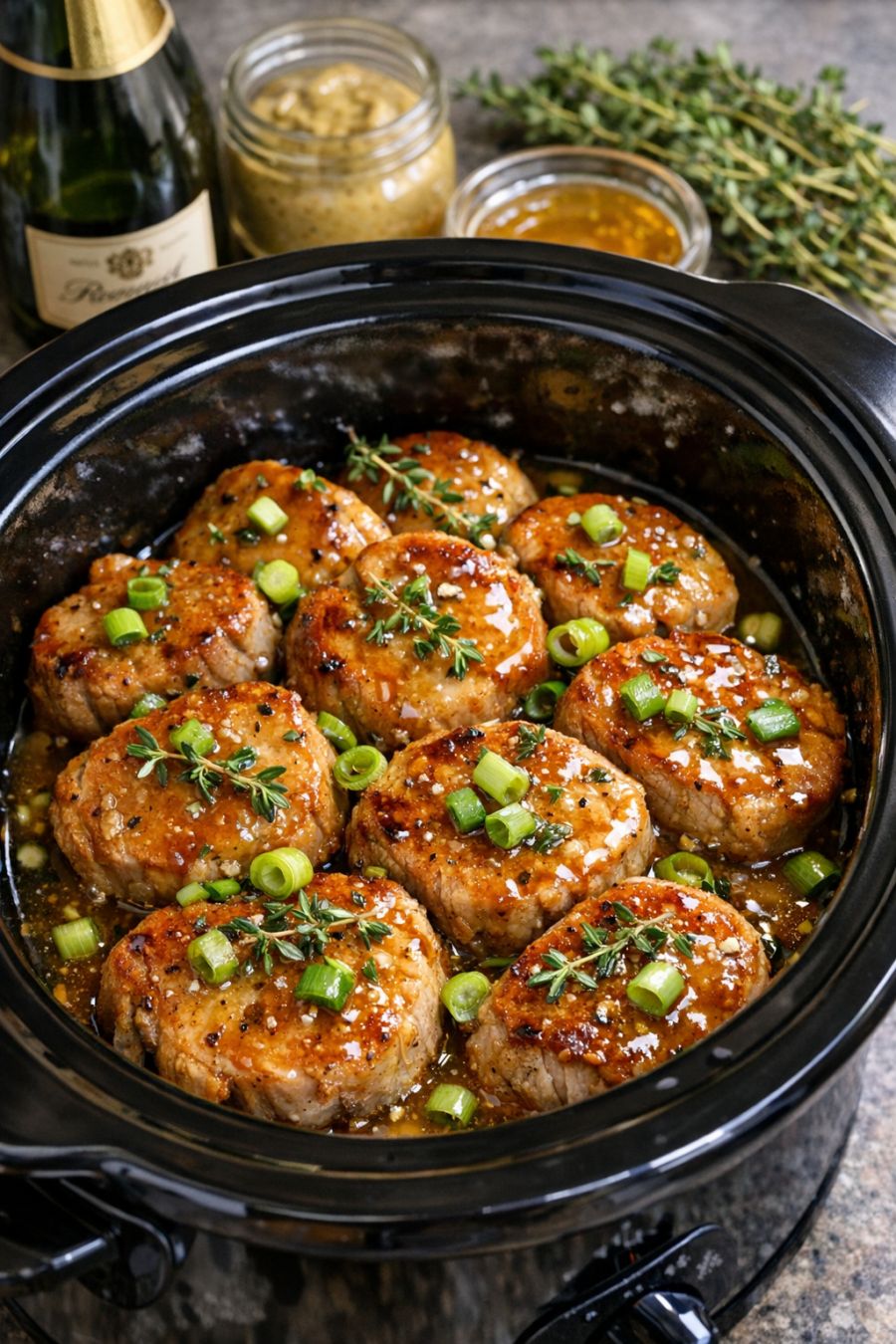
This 4-ingredient slow cooker champagne glazed pork is one of those weeknight miracles: you literally dump raw pork tenderloin medallions into the slow cooker, add three pantry-friendly ingredients, and let gentle heat do the rest.
The champagne (or sparkling wine) reduces into a lightly sweet, aromatic glaze that feels a bit celebratory without being fussy. Pork and wine have a long history together in European cooking, especially in French and German kitchens, but here we’re taking that classic pairing and streamlining it for a modern slow cooker—no searing, no fuss, just a hands-off, family-friendly meal.
Serve the champagne glazed pork medallions with buttery mashed potatoes or a simple rice pilaf to soak up the glossy sauce. A crisp green vegetable—like steamed green beans, roasted Brussels sprouts, or a tossed salad with a bright vinaigrette—adds welcome contrast to the richness of the pork.
For a slightly more indulgent spread, offer warm crusty bread to swipe through the glaze and pour the remaining champagne or a dry white wine alongside for the adults.
Slow Cooker Champagne Glazed Pork Medallions
Servings: 4
Ingredients
1 1/2 to 2 pounds pork tenderloin, sliced into 1-inch medallions
Directions
Place the raw pork tenderloin medallions in an even layer on the bottom of a 4- to 6-quart slow cooker. The pieces can overlap slightly, but try not to stack them too high so they cook evenly.
In a small bowl or measuring cup, whisk together the champagne, honey, and Dijon mustard until the honey is fully dissolved and the mixture looks smooth. If using, whisk in the salt and pepper.
Pour the champagne mixture evenly over the pork medallions in the slow cooker. The liquid will not fully cover the meat, and that’s fine—the pork will release juices as it cooks.
Cover the slow cooker with the lid and cook on LOW for 3 1/2 to 4 1/2 hours, or on HIGH for about 2 to 2 1/2 hours, until the pork medallions are tender and reach an internal temperature of at least 145°F (63°C). Avoid lifting the lid frequently, as this extends cooking time.
Once the pork is done, use a slotted spoon to gently transfer the medallions to a serving platter, tenting loosely with foil to keep them warm while you finish the glaze.
Carefully pour the cooking liquid from the slow cooker into a medium saucepan. Bring it to a lively simmer over medium-high heat and cook, stirring occasionally, until it reduces by about half and thickens slightly to a light glaze, 8 to 12 minutes. (It should coat the back of a spoon; it will thicken a bit more as it cools.)
Taste the glaze and adjust seasoning if needed with a pinch of salt or a small drizzle of extra honey. Spoon the warm champagne glaze over the pork medallions on the platter, reserving some to pass at the table.
Serve the champagne glazed pork medallions immediately, topped with any remaining glaze and accompanied by your favorite sides.
Variations & Tips
For a slightly different flavor profile, you can swap the honey for an equal amount of light brown sugar, which will give the glaze a deeper, caramel-like note. If you enjoy a bit of herbal character, whisk 1 teaspoon of dried thyme or 1 tablespoon of chopped fresh rosemary into the champagne mixture before pouring it over the pork. To lean into a more Dijon-forward, bistro-style flavor, increase the Dijon mustard to 3 tablespoons and finish the glaze with a small knob (about 1 tablespoon) of butter off the heat for extra sheen and richness.
If you don’t have champagne on hand, any dry sparkling wine works well. In a pinch, you can use a dry, still white wine, understanding that you’ll lose the subtle sparkle but keep the wine’s acidity and aroma. For a non-alcoholic version, substitute a mix of 3/4 cup apple juice and 1/4 cup white grape juice plus 1 tablespoon apple cider vinegar to mimic the brightness of wine. The sweetness of juices can vary, so taste and adjust with a little more mustard or a pinch of salt if it feels too sweet.
Food safety tips: Always start with raw pork that has been properly refrigerated, and do not leave it at room temperature for extended periods before cooking. Pork tenderloin should be cooked to a minimum internal temperature of 145°F (63°C), measured at the center of the thickest medallion with an instant-read thermometer, and then served promptly.
Because this recipe uses wine, remember that while the alcohol content decreases as the glaze simmers, it may not fully evaporate; those who avoid alcohol entirely may prefer the non-alcoholic substitution. Never attempt to thicken the sauce by leaving the slow cooker partially uncovered during cooking—this can keep the food in the temperature “danger zone” longer. Instead, reduce the cooking liquid on the stovetop as directed. Refrigerate leftovers within 2 hours of cooking and consume within 3 to 4 days, reheating gently until hot throughout.